Hurricane Preparedness
Part 3: What to Do After It Happens

Although you may be able to breathe a sigh of relief for surviving, residual dangers persist long after the skies clear. Recovery demands patience, vigilance, and methodical care.
Wait for Official Clearance
Listen to local broadcasters and emergency-manager announcements confirming:
Roads are passable and cleared of fallen timber, poles, and wreckage
Drinking-water advisories have been lifted
Utility restoration crews assess grid stability before restoring neighborhood circuits
Structural inspections authorize building entry
Navigate Hazards Carefully
Upon returning to damaged properties:
Electrical threats: Do not touch powered equipment contacting wet surfaces. Have licensed electricians evaluate wiring integrity before reactivating breakers. Assume downed lines carry voltage until verified otherwise.
Gas leaks: Smell propane odor or hear hissing sounds near meters? Exit immediately and call your gas provider from a neighbor’s residence. Never ignite flames, light switches, or cigarettes around suspected leaks.
Structural instability: Cracked foundations, sagging floors, splintered beams, and compromised load-bearing walls indicate buildings unsafe for occupancy. Engage professional inspectors before resuming habitation.
Contaminated water: Floodwaters harbor sewage, agricultural chemicals, industrial pollutants, animal carcasses, and disease-causing bacteria. Wear rubber boots, gloves, N95 respirator masks, and goggles during cleanup operations. Shower promptly after exposure. Boil tap water or consume bottled supply until municipalities certify potable status.
Mold prevention: Begin drying affected spaces within forty-eight hours to inhibit fungal colonization. Discard porous materials saturated beyond salvage (carpets, drywall insulation, upholstered furnishings). Consult EPA mold-guidelines (epa.gov/mold) for remediation procedures. Vulnerable populations—including asthma sufferers, immunosuppressed persons, and pregnant women—should avoid entering heavily contaminated environments altogether. Children must not participate in disaster-cleanout activities.
Reconnect Responsibly
Phone towers overload instantly following mass disruptions. Preserve bandwidth for genuine emergencies:
Reserve telephone calls exclusively for life-threatening situations requiring police, fire, or ambulance dispatch
Deploy text messaging platforms and social-network check-in features for routine welfare updates with relatives and associates
Check in to Red Cross so loved ones can confirm your whereabouts remotely. Here are the links to Red Cross North & Central Florida and South Florida.
Document Losses Thoroughly
Insurance adjusters require meticulous evidence catalogs:
Photograph every damaged wall, soaked carpet, ruined appliance, displaced fixture, and dented automobile from multiple angles.
Record serial numbers, purchase receipts, warranty documentation, and estimated valuations wherever feasible.
Maintain chronological logs detailing repair expenditures, temporary lodging invoices, meals consumed en route from permanent residences, rental-car charges, and related displacement costs.
These records anchor future reimbursement claims under homeowner policies, federal disaster grants, and small business administration loan applications.
Seek Community Support
Connect with regional relief organizations deploying field kitchens, cots, mental-health counselors, and legal advisors specializing in reconstruction financing:
American Red Cross operates emergency shelters nationwide
Community Emergency Response Teams (CERT) train volunteers in search-and-rescue fundamentals, triage assessment, and lightweight extrication techniques
Faith-based groups coordinate donation distribution centers stocking clothing, toiletries, cribs, bedding sets, and cooking utensils
Volunteer opportunities accelerate communal healing while providing psychological benefits to responders experiencing vicarious trauma mitigation
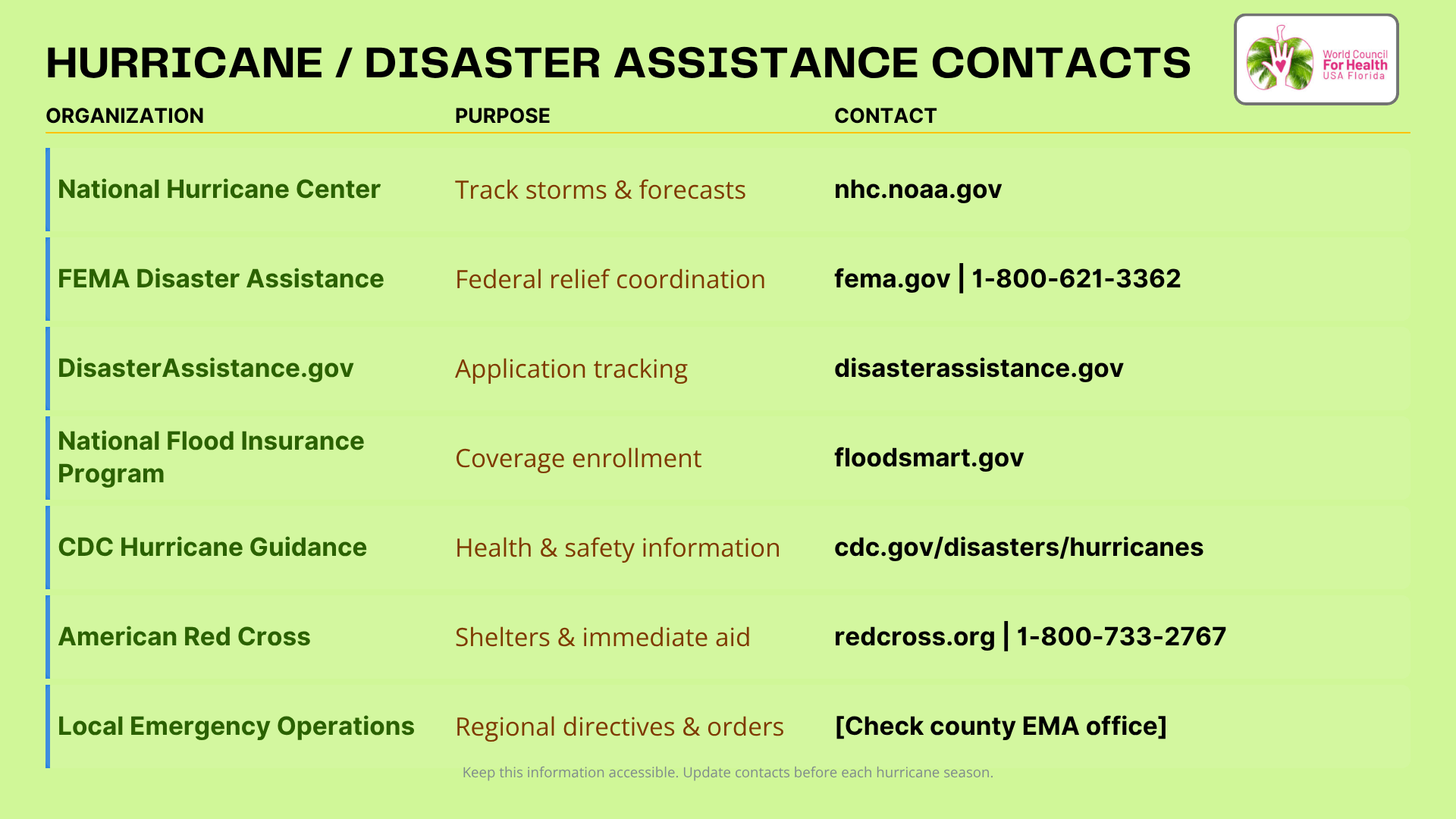
Quick Reference: Essential Contacts
Hurricanes test resilience, but they rarely catch prepared families off guard. By assembling supplies months ahead of peak seasonal months, rehearsing exit strategies through drill exercises, maintaining uninterrupted situational awareness via dual-channel communications, and recovering systematically once clearance arrives—you position yourself advantageously against whichever trajectory threatens closest tomorrow morning.
Knowledge transforms fear into confidence. Preparation converts panic into procedure. And readiness saves lives—not only yours but those surrounding you. Start today. Your future self will thank you.
If you liked this article, please share and/or subscribe or be a member of the World Council for Health Florida
.