Hurricane Preparedness
Part 1: Before It Happens

Hurricanes are among nature’s most powerful and destructive forces. With sustained winds exceeding 74 mph, massive storm surges, torrential rainfall, and widespread flooding, a single hurricane can reshape communities overnight. From Florida’s Gulf Coast to the eastern seaboard—and across the western Pacific as typhoons—these storms demand respect, preparation, and swift action.
Whether you live in a coastal community, an inland town hundreds of miles from shore, or somewhere in between, understanding hurricane risks and knowing what to do can mean the difference between safety and catastrophe.
Understanding Hurricanes
Hurricanes begin as clusters of thunderstorms over warm ocean waters—at least 80°F (27°C)—typically forming between late spring and early fall. As moist air rises and cools, it creates areas of low pressure. Surrounding air rushes inward, spins due to Earth’s rotation (the Coriolis effect), and intensifies into organized cyclonic circulation. Once winds reach 74 mph, the system earns the designation Category 1 hurricane.
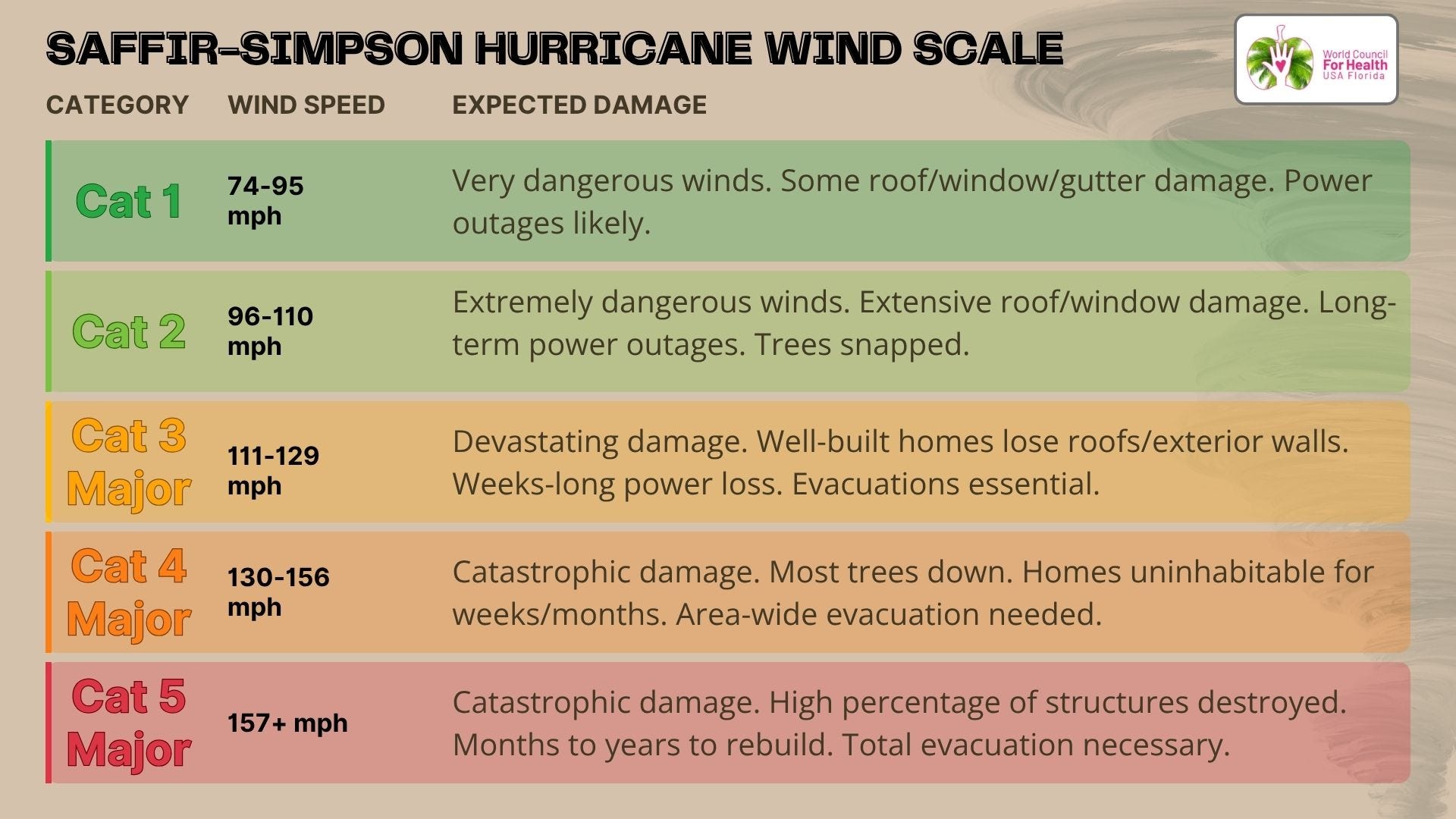
Categories and Their Impact
The Saffir-Simpson scale classifies hurricanes into five categories based on maximum sustained wind speed:
Key Threats Beyond Wind
While wind grabs headlines, other hazards cause the majority of injuries and fatalities:
Storm surge—rising seawater pushed ashore—is historically the leading cause of hurricane-related deaths in the United States. Even Category 1 hurricanes can produce deadly surge.
Flooding from heavy rainfall extends far beyond the coastline. Inland areas frequently experience flash floods and river overflow.
Tornadoes commonly spawn from outer bands of a hurricane, sometimes causing concentrated destruction.
Rip currents surge in coastal waters, endangering swimmers long before landfall.
When Is Hurricane Season?
North Atlantic & Eastern Pacific: June 1 – November 30
Western Pacific (Typhoon season): Varies by region, roughly May – October
Peak activity typically occurs mid-August through September
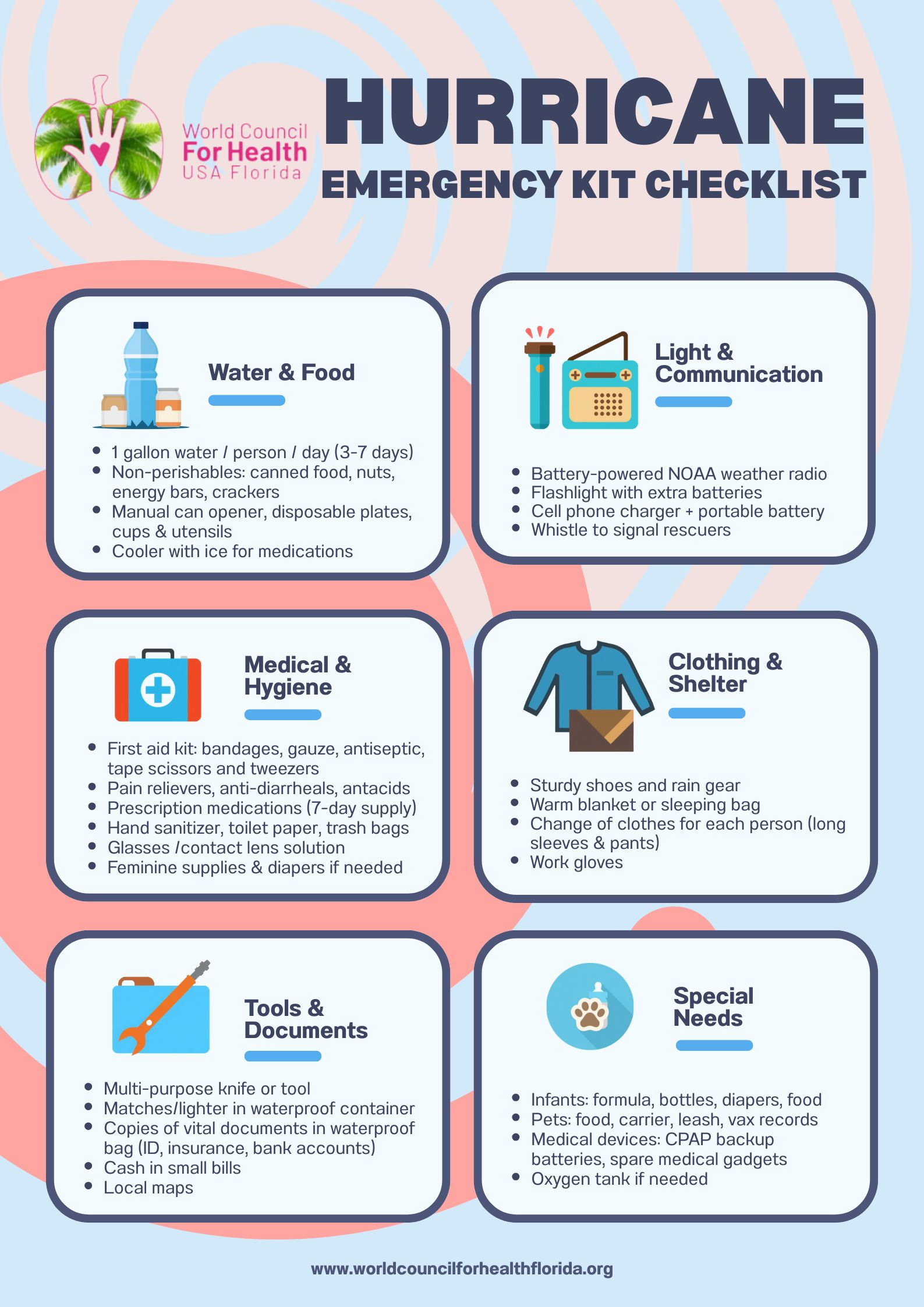
Build Your Emergency Supply Kit
Stockpile enough essentials for at least three to seven days—emergency services may take extended time to restore utilities and access roads after severe storms.
Create a Family Emergency Plan
Sit down with everyone in your household and map out exactly what happens when a hurricane approaches:
Identify your risk. Visit FEMA’s Flood Map Service Center to understand your flood-zone exposure. Not all hurricane damage comes from the coast—inland counties routinely suffer catastrophic flooding from storm runoff.
Know your evacuation zone. Local emergency management assigns zones. Understand whether you reside in a mandatory-evacuation area and familiarize yourself with designated escape routes beforehand. Practice driving these routes.
Designate meeting spots. Choose one location near home and another farther away in case separation occurs during the storm.
Establish communication protocols. Text messages often succeed when voice calls fail. Agree on an out-of-area contact person whom all members can check in with.
Plan for accessibility needs. If someone in your household has disabilities, consult local emergency-management offices about shelters equipped with medical support and power connections for mobility devices.
Protect your home. Clean gutters and drains. Install hurricane shutters or prepare plywood panels measuring approximately ½-inch thick, cut to fit each window opening. Reinforce garage doors—a weak point that allows wind to penetrate and destroy rooftops. Trim dead branches and outdoor objects that could become projectiles.
Stay Connected to Official Information
Set up multiple alert channels before the storm arrives:
Download the FEMA mobile app for real-time warnings covering up to five geographic locations simultaneously
Sign up for county and municipal emergency-alert notifications
Tune to local AM/FM stations—the Emergency Alert System (EAS) activates automatically during disasters
Monitor the National Hurricane Center for tracked systems and projected paths
Prepare a crank-style or battery-operated NOAA Weather Radio for continuous broadcasts when cellular networks collapse
Financial Preparedness
Take these critical financial steps now rather than scramble afterward:
Review homeowner’s, renter’s, and flood insurance policies annually. Standard homeowners policies do not cover flood damage; separate flood insurance through the NFIP or private insurers is required.
Document belongings thoroughly with photos or video inventory for claims purposes. Store digitized records securely online.
Withdraw cash if banks announce closures ahead of arrival. Small bills ($1, $5, $10) prove useful when electronic payment systems crash.
Prepare your emergency kits now if you haven’t and plan for your safety procedures. Reading this article will not help if you don’t use the knowledge to empower yourselves.
Part 2 article will be on what to do during a hurricane. So, stay tuned.
If you liked this article, please share and subscribe or be a member of World Council for Health Florida
.